
Work Health and Safety (WHS) Trends 2026

2026 WHS landscape will be reshaped by regulatory reforms, technological innovations and social change. Australia’s jurisdictions have enacted stronger psychosocial and director‐due‐diligence laws (Safe Work Australia, 2025; Milionis, 2025), and industry analysts predict soaring investment in AI safety tools, remote‐work solutions and climate resilience (Clarke et al., 2025; Turner et al., 2025). These intersecting forces create five key trends for WHS: AI‐driven safety and surveillance ethics; psychosocial risk regulation and mental health duties; remote and hybrid work safety; climate resilience and occupational risk; and inclusive safety culture (DEI). Each trend carries controversies, compliance burdens and operational challenges that WHS leaders must navigate with both evidence and ethical judgment.
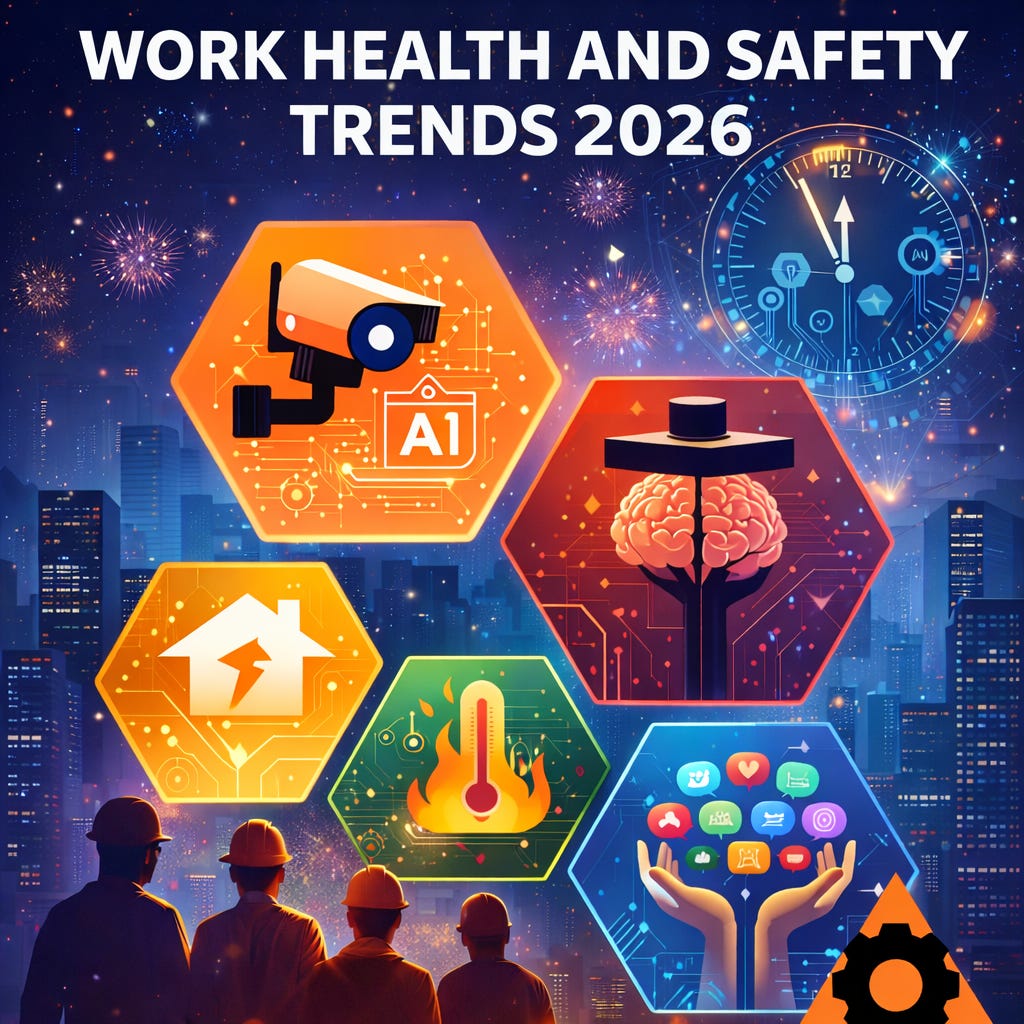
1. AI‑Driven Safety and Surveillance Ethics
AI and automation promise unprecedented hazard detection and intervention. For example, AI‐enabled cameras and wearables can identify when workers lack PPE or assume unsafe postures, and predictive analytics can flag high‐risk incidents before they occur. Markets are expanding: a StartUs report projects the global AI‐powered workplace safety market reaching $6.8 billion by 2030. Yet adoption remains limited: a survey found only ~29% of firms use AI for OHS, mostly large or high‐hazard enterprises. Shah and Mishra (2024) note that AI can shift safety from reactive to proactive, but also warn that systematic evaluation of these technologies is still lacking.
The ethical and legal controversies are acute. Surveillance technologies raise privacy concerns and may undermine worker autonomy. The Victorian government’s inquiry recommends “technology-neutral” laws requiring any monitoring to be reasonable, proportionate and notified in advance. Workers fear covert monitoring or intrusive biometric tracking; unions demand transparency and consent, while firms worry that strict oversight could slow life‐saving tech deployment. Bias and equity are also issues: AI systems may misidentify non‑standard body types or disproportionately target certain groups, and small businesses may be left behind if AI investment favors larger players (Jetha et al., 2025). Currently WHS laws offer little guidance on AI governance, creating regulatory uncertainty (Jetha et al., 2025). In 2026 we expect pressure for new standards – for example, mandates on human review of automated decisions and stricter data‐privacy rules (Milionis, 2025).
For boards and WHS managers, AI entails high compliance and implementation costs. Robust cybersecurity and data‑governance policies are essential when deploying sensors, drones or analytics systems. Firms must balance the ROI of fewer injuries and lower insurance premiums against investments in technology and controls. Mismanaged AI surveillance could trigger fines or reputational damage. Ultimately, companies that embrace AI ethically – with clear privacy safeguards and worker buy‑in – may reduce incidents and gain competitive advantage, whereas those who rush in without trust risk backlash.
2. Psychosocial Risk Regulation and Mental‑Health Duties
By 2026 mental health will be a core WHS duty. All Australian jurisdictions have enacted psychosocial hazard regulations requiring the identification and control of risks like stress, bullying and fatigue. Victoria’s 2025 Psychological Health Regulations, for example, define psychosocial hazards in work design or relationships and impose a hierarchy of controls (favoring changes to systems or job design over mere training). Safe Work Australia reports that mental‑health conditions now account for about 12% of serious claims, with significantly longer recovery time than physical injuries. The Australian Institute of Company Directors notes that from late 2025 every state equates psychological hazards with physical ones in law. Compliance thus requires new risk‑assessment processes, documented controls and regular reviews after incidents or organizational changes[18]. International standards (e.g. ISO 45003) similarly integrate psychosocial risks into safety management systems (ISO 45003:2021).
These changes have provoked debate. Employers warn that psychosocial hazards – such as “poor support” or “high job demands” – are inherently subjective and hard to measure, risking uneven enforcement. Mandatory high‑order controls (e.g. redesigning work) can be costly and complex, especially for small businesses. Some commentators deride the rules as “nanny‑state” overreach that undermines managerial discretion and adult learning. At the same time, worker advocates point to insufficient action so far, and highlight that bullying and gender‐based violence disproportionately affect vulnerable groups. A notable addition is the Universities Accord (2025) requiring higher‐education providers to address gender‐based violence in their WHS regimes; some question whether WHS should police social issues beyond existing criminal laws. Another flashpoint is director liability: regulators have made executives personally accountable for psychosocial harms, and 2026 may see high‑profile prosecutions testing these duties.
Meeting these obligations imposes significant burdens. Companies must invest in expertise (often external consultants), new data‑gathering tools and expanded incident-reporting systems. Psychosocial risks must be integrated into existing WHS management systems, with clear documentation of risk controls and their effectiveness. This may involve new platforms for employee surveys, specialized training for managers, and enhanced Employee Assistance Programs. Such investments are costly upfront, and some firms may fall behind due to capacity constraints. However, failing to address psychosocial duties carries legal penalties and reputational harm. Organizations that demonstrate genuine commitment to mental health – through transparent policies and meaningful culture change – may ultimately benefit from improved morale, lower absenteeism and talent retention, whereas token or superficial measures could provoke cynicism or even legal challenge.
3. Remote and Hybrid Work Safety
The rise of remote and hybrid work has expanded the duty of care beyond traditional workplaces. Surveys find that roughly 40–45% of employees work remotely at least some of the time. Companies are responding with new protocols and resources: for example, providing ergonomic chairs and monitors for home offices, conducting virtual fire drills, and offering online wellness workshops. Research confirms that remote work brings mixed health effects. A 2023 review found increased sedentary behavior and musculoskeletal issues (e.g. back and neck pain) associated with prolonged computer use, as well as elevated stress and “technostress” from constant connectivity. (One study cited by Wells et al. reported home workers sitting on average ~335 minutes per day vs 225 for on-site workers.) Conversely, some remote employees enjoy better work–life balance, reduced exposure to commuting hazards, and lower incidence of infections and air pollution exposure. Firms are also tracking injury claims: one report notes remote‑work claims have risen by 24–54%, prompting attention to home‑office ergonomics and mental strain.
These trends raise challenging questions. How far does an employer’s responsibility extend into an employee’s home? Providing equipment (chairs, standing desks) is one solution, but monitoring a private home for hazards can feel invasive. Regular remote safety check‑ins or well‑being surveys may be seen by staff as surveillance rather than support. Moreover, in many jurisdictions the legal status of home‑office injuries or equipment failures remains unclear, creating liability uncertainty for businesses. The blurred work–life boundary has led to debates over “right to disconnect”: 24/7 connectivity can undermine rest and recovery, contributing to burnout (Wells et al., 2). Some companies are experimenting with productivity monitoring tools, but these echo the earlier surveillance debate – they can provide safety benefits (e.g. geo‑fencing for lone workers) yet provoke resistance over privacy. Regulators have begun to issue guidance, but enforcement is still evolving; 2026 may see clearer rules on home workstation standards and possibly litigation over remote‐work injuries.
To manage these issues, organizations are allocating budgets and adopting new solutions. Employers are using digital risk‑assessment tools and virtual training to simulate safe home environments and travel scenarios. Investment is growing in travel risk management platforms, wellness apps and online safety training. However, there is caution: overly intensive digital monitoring of remote workers could conflict with privacy laws and undermine trust. Best practice appears to be flexible programs that emphasize support over surveillance – for example, giving employees autonomy in how they meet safety standards and offering optional ergonomic consultations. In sum, remote‑work safety demands innovative compliance approaches that balance expanded duty of care with respect for personal space, requiring both policy adjustments and cultural sensitivity.
4. Climate Resilience and Occupational Risk
Climate change and extreme weather are creating new occupational hazards. Recent studies estimate that ~2.4 billion workers (≈70% of the global workforce) are regularly exposed to excessive heat, with heat-related illnesses causing tens of thousands of deaths and millions of injuries annually. The transition to green industries also brings risks (e.g. exposure to lithium or toxic recycled materials) even as it creates millions of jobs. In Australia, businesses face more frequent wildfires, floods and storms. Industry reports warn that weather disasters are among the top threats to business continuity in 2026. For example, AlertMedia highlights that 83% of power outages are weather‑related, and urges companies to perform site‐specific threat assessments, establish backup systems (like generators), and train staff for concurrent emergencies.
These issues are politically and fiscally contentious. Some managers view extreme-weather preparedness as a “climate agenda” beyond WHS’s scope, arguing it should fall under environmental policy rather than company budgets. Others point out that on-the-ground employees – in construction, mining, agriculture and outdoor services – face real dangers from heat, smoke or floods. Without proper precautions, firms may be liable for heatstroke or have to halt operations in disasters. However, measures like cooling shelters, modified shift schedules, or onsite air conditioning incur costs that some companies resist. There is also an international equity element: regions least responsible for emissions often suffer the worst hazards. The green transition brings another paradox: eliminating some dangerous jobs (e.g. coal mining) while introducing new ones (battery recycling) with their own hazards. In 2026 WHS professionals will likely face calls to advocate for nationwide heat-stress standards and to integrate climate scenarios into risk assessments, even as they debate corporate responsibility for climate adaptation.
In response, many organizations are investing in climate resilience. Capital is going into advanced threat‐intelligence systems and severe‐weather communication platforms that provide early warnings. Partnerships with meteorological agencies and insurers are expanding. Companies are developing business continuity plans that anticipate overlapping risks (for instance, a storm that causes both flooding and power loss). Training is being updated to include climate hazards (e.g. heat-exposure protocols, evacuation drills for wildfires). However, these investments must be balanced against short‑term financial pressures. Those firms that treat climate risk as a central WHS issue – embedding robust emergency planning and resilience measures – may build stakeholder trust and avoid catastrophic losses. Those that ignore it risk disruptions, legal exposure and damage to their social license.
5. Inclusive Safety Culture: Diversity, Equity and Inclusion (DEI)
A mature safety culture in 2026 extends beyond hazard prevention to embrace diversity, equity and psychological safety. Experts define diversity as the mix of identities (race, gender, ability, etc.), equity as fair access to resources, and inclusion as creating environments where everyone feels valued. Inclusive safety means addressing how biases and systemic barriers affect risk exposure. For example, studies show that workers of color and persons with disabilities face higher injury rates in some industries. In response, companies are expanding PPE ranges (e.g. larger sizes, different models) and customizing training to diverse learning needs. Psychological safety is also prominent: about 75% of employees report that anxiety, depression or fear impact their work performance. Industry reports emphasize that when employees feel safe to speak up (free of bullying or harassment), overall safety improves and incidents drop.
DEI initiatives in WHS are divisive. Advocates argue that inclusive culture is essential to protect marginalized workers and build trust – pointing to research linking diversity with better team performance and retention. They note practical gains: considering diverse needs can reduce absenteeism and uncover hidden risks. Critics, however, may see mandatory DEI programs, training or quotas as tokenistic or politically driven. Some worry that focusing on identity might distract from “universal” safety hazards. Debates arise over contentious issues, such as balancing religious dress with hardhat requirements or whether to set affirmative targets for underrepresented groups. There is also concern about the cost and complexity of designing inclusive PPE and the privacy implications of collecting data on race/gender (needed to measure progress). These debates ensure that DEI in WHS remains emotionally charged in 2026.
Implementing inclusive safety culture requires commitment. Organizations are investing in tailored training and equipment: for example, safety courses that address cross-cultural communication and hazard analysis, or PPE designed for varied body types. Diverse employee voices are being included on safety committees and in incident investigations to ensure multiple perspectives. Communication strategies are being revised (e.g. multilingual signage, accessible formats). Industry publications note a rise in startups and solutions focused on DEI – such as platforms for anonymous feedback and consultancies for equitable WHS design. Companies that fail to adapt may face legal and reputational risks (for example, claims of discrimination in injury cases). Conversely, those that genuinely integrate DEI into WHS may gain benefits in workforce engagement and innovation.
Preparing for Intersecting Challenges
The WHS environment in 2026 is defined by innovation, regulation and social change. Each of the five trends intersects with the others: for instance, AI surveillance may amplify psychosocial stressors; remote work shifts impact inclusive culture; climate planning intersects with workload design. Taken together, these issues call for WHS programs that go beyond compliance. As one analysis concludes, a “gold‑star” 2026 safety strategy will integrate cutting‑edge technology with human‑centred design, proactively manage psychosocial and environmental risks, and cultivate trust through privacy and diversity protections.
WHS leaders should anticipate more stringent laws (e.g. on psychosocial hazards and executive due diligence) and prepare by updating risk management systems, training and policies accordingly. They should also invest in the data and tools to demonstrate compliance (for example, documenting control measures and outcomes). Critically, professionals must engage stakeholders – from boards to workers – in conversations about ethics and values, not just hazards. By grounding decisions in recent evidence (Shah & Mishra, 2024; Turner et al., 2025) and best practices, and by adopting a holistic mindset, organisations can navigate controversies constructively.
In summary, WHS in 2026 will be a contested field where safety advances and human rights converge. Successful organisations will be those that leverage new technologies and regulations while addressing the underlying human factors – mental health, inclusion and fairness. This requires proactive planning, ongoing dialogue across functions, and a willingness to revisit assumptions about what “safety” means in a rapidly changing world. By doing so, WHS professionals can help build workplaces that are not only compliant, but truly safe, equitable and resilient in the face of 21st‑century challenges.
References :
AlertMedia. (2025). 2026 workplace safety trends: 6 ways to support your employees. Retrieved from https://www.alertmedia.com/blog/safety-trends/
Clarke, S., Saunders, J., & Gates, S. (2025, Dec 2). Psychosocial developments to shape your organisation’s risk management priorities for 2026. King & Wood Mallesons. Retrieved from https://www.kwm.com
Fire & Safety Australia. (2024). 2025 workplace safety trends and predictions: Guide to a safer future. Retrieved from https://fireandsafetyaustralia.com.au
Jetha, A., Lee, H., Smith, M. J., Arrandale, V. H., Biswas, A., Mustard, C., & Smith, P. M. (2025). Landscape of artificial intelligence use for occupational health and safety practice in two Canadian provinces. American Journal of Industrial Medicine, 68(11), 875–886.
Milionis, N. (2025). Victoria’s new Psychological Health regulations are now in effect. Norton Rose Fulbright Insights. [Blog post].
MiSAFE Solutions. (2025, Sept 16). Emerging WHS regulations in Australia: What businesses need to know for 2026. Retrieved from https://misafesolutions.com.au
Risk Training Professionals. (2025, Dec 1). How each Australian state regulates psychosocial health and safety. Retrieved from https://risktrainingprofessionals.com
Shah, I. A., & Mishra, S. (2024). Artificial intelligence in advancing occupational health and safety: An encapsulation of developments. Journal of Occupational Health, 66(1), uiad017.
StartUs Insights. (2025). Top 10 workplace safety trends in 2026 and beyond. Retrieved from https://www.startus-insights.com
Turner, M. C., Basagaña, X., Albin, M., Broberg, K., Burdorf, A., van Daalen, K. R., … & Lowe, R. (2025). Occupational health in the era of climate change and the green transition: A call for research. The Lancet Regional Health – Europe, 54, 101353.
Wells, J., Scheibein, F., Pais, L., dos Santos, N. R., Dalluege, C.-A., Czakert, J. P., & Berger, R. (2023). A systematic review of the impact of remote working referenced to the concept of work–life flow on physical and psychological health. Workplace Health & Safety, 71(11), 507–521.