
The Great Nosedive- NSW Workers Compensation Reforms and the National Fracture in 2026
The NSW workers compensation scheme did not stumble. It dropped.

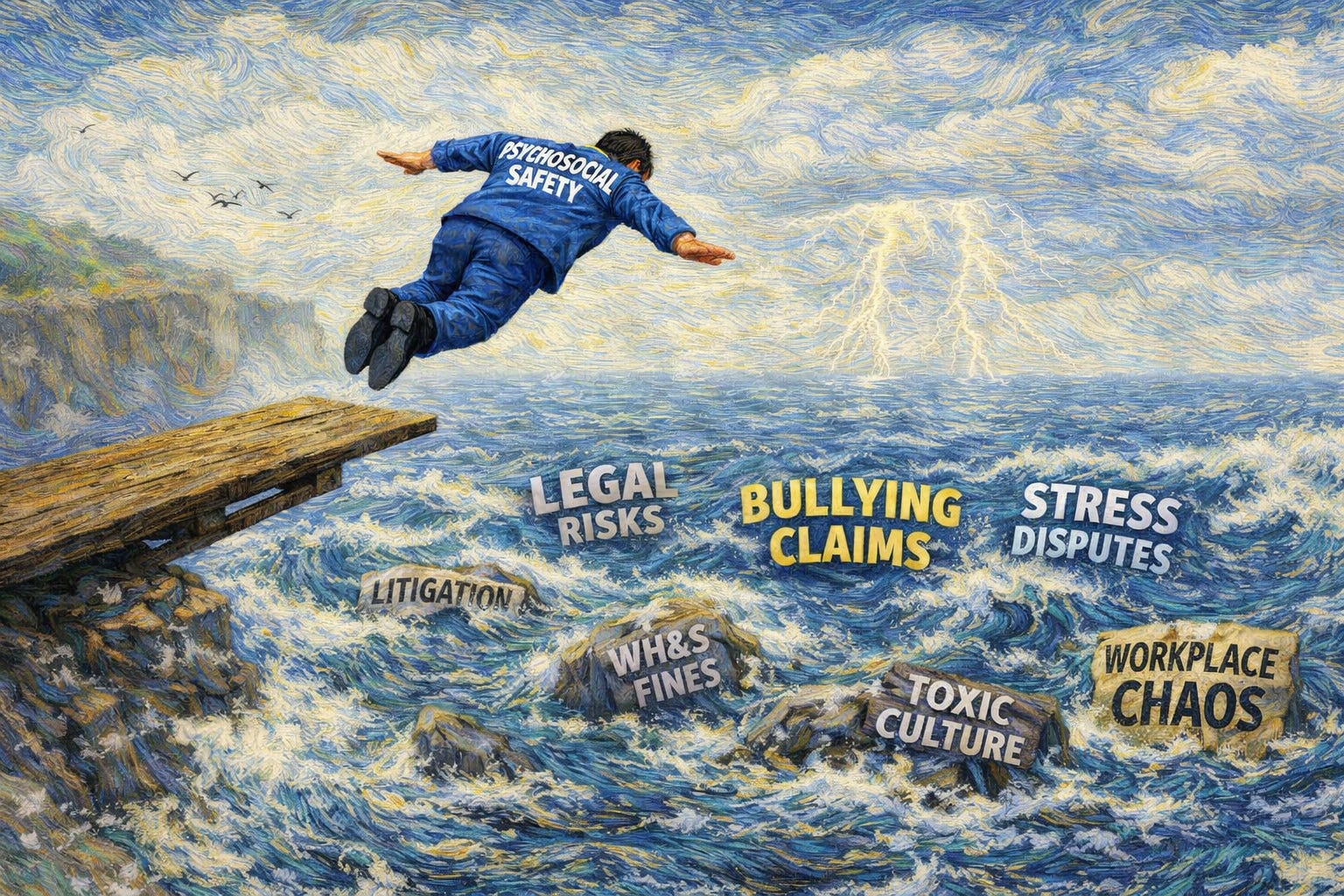
What we are watching in 2026 is not fine-tuning.
It is a deliberate contraction of access, duration and liability.
NSW has moved faster and harder than any other Australian jurisdiction, driven by a projected multi-billion-dollar scheme deficit and political tolerance for reduced coverage in exchange for premium stability.
This is the great nosedive.
NSW in 2026
From safety net to gatekeeping system
The Workers Compensation Legislation Amendment Act 2025 is now fully in force. It reshaped psychological injury claims at a structural level.
What is now law
Psychological injury claims now face a materially higher bar.
Employment must be the main contributing factor, not one of several contributing factors.
Claims must be anchored to objective events, such as bullying or sexual harassment, not diffuse stress narratives.
Weekly payments for primary psychological injuries are capped at 130 weeks, unless the worker meets a 21 percent Whole Person Impairment threshold.
Medical treatment must now meet a reasonable and necessary test. This is not semantic. It is a higher evidentiary hurdle and it shifts power toward insurers and assessors.
Workers are generally limited to one principal WPI assessment, reducing re-litigation and scheme churn.
Employers now pay an excess equal to the first two weeks of weekly entitlements for new claims. Cost is being pushed down the chain.
The government’s proposal to immediately lift the psychological injury threshold to 31 percent was defeated.
For now, the 15 percent threshold remains for lump sum benefits.
This matters. It shows where the political fault lines still sit.
What is coming next
February and July 2026
A second wave is imminent via the Workers Compensation Legislation Amendment (Reform and Modernisation) Bill 2025, expected to pass in February 2026 following a parliamentary compromise.
Confirmed direction
An 18-month restriction on average premium increases will begin in 2026. This caps volatility and protects businesses from forecast increases over the next three years.
A new Return to Work Intensive Year will provide an additional 52 weeks of income replacement and medical benefits for seriously injured workers who meet eligibility thresholds.
In July 2026, the psychological injury WPI threshold will rise to 25 percent, with staged increases toward the high-20s by the end of the decade.
This is not gradual reform. It is a narrowing funnel.
The national picture
Fragmentation, not harmonisation
While NSW tightens, other states are taking materially different paths.
Queensland
Queensland has frozen average premium rates for 2025 to 26 at $1.343 per $100 of wages, maintaining one of the lowest cost schemes in the country.
Victoria
Victoria is holding average premiums steady at 1.8 percent, focusing reform energy on return to work duration and scheme efficiency following earlier structural changes.
Western Australia
WA continues to recalibrate after its 2024 legislative reset, with premium increases tied to expanded medical and benefit caps rather than eligibility contraction.
Tasmania and ACT
Both jurisdictions are seeing modest upward adjustments reflecting actuarial and medical cost pressures, not wholesale redesign.
The idea of a nationally consistent workers compensation experience is now fiction.
Why this is happening
And why it matters to employers
NSW has chosen scheme sustainability over accessibility.
The result is a system that is cheaper to run but harder to enter, harder to stay in, and quicker to exit.
This does not remove risk.
It re-routes it.
Costs shift from insurers to employers through excesses, disputes, and prolonged workplace conflict.
Risk shifts from compensation to WHS enforcement, civil claims, and reputational exposure.
SafeWork NSW is not standing still. New psychosocial reporting obligations commence in 2026, supported by additional specialist inspectors.
If psychological injury is harder to compensate, it becomes more important to prevent.
That is not ideology. It is arithmetic.
What boards and executives need to do now
If you are operating in NSW, claims management is no longer the centre of gravity.
Prevention, work design, workload governance, role clarity and manager capability are.
Three priorities for 2026:
Audit psychosocial hazards properly
Not surveys. Not engagement scores.
Actual hazard identification aligned to WHS law and ISO 45003.Stress test return to work systems
If your RTW plans cannot operate under tighter eligibility and shorter benefit horizons, they will fail workers and expose officers.Get state of connection right
Cross-border errors are now expensive. Premium leakage and compliance breaches follow quickly.
The nosedive is not over.
But it is predictable.
Organisations that treat these reforms as a technical insurance issue will be caught flat-footed.
Those that treat them as a governance signal will adapt.
Follow for WHS leadership grounded in practice.
#whsguard #PsychosocialRisk #LetsTalkSafety
References
State Insurance Regulatory Authority NSW. Workers Compensation Legislation Amendment Act 2025.
https://www.sira.nsw.gov.au
NSW Parliament. Workers Compensation Legislation Amendment (Reform and Modernisation) Bill 2025.
https://www.parliament.nsw.gov.au
SafeWork NSW. Managing psychosocial hazards at work.
https://www.safework.nsw.gov.au
Queensland Government. WorkCover Queensland premium rates 2025–26.
https://www.worksafe.qld.gov.au
Victorian WorkCover Authority. Premium rates and scheme updates 2025–26.
https://www.worksafe.vic.gov.au
WorkSafe Western Australia. Workers Compensation scheme updates.
https://www.worksafe.wa.gov.au