
Book Review: The Checklist Manifesto
Why simple tools only work when leaders do

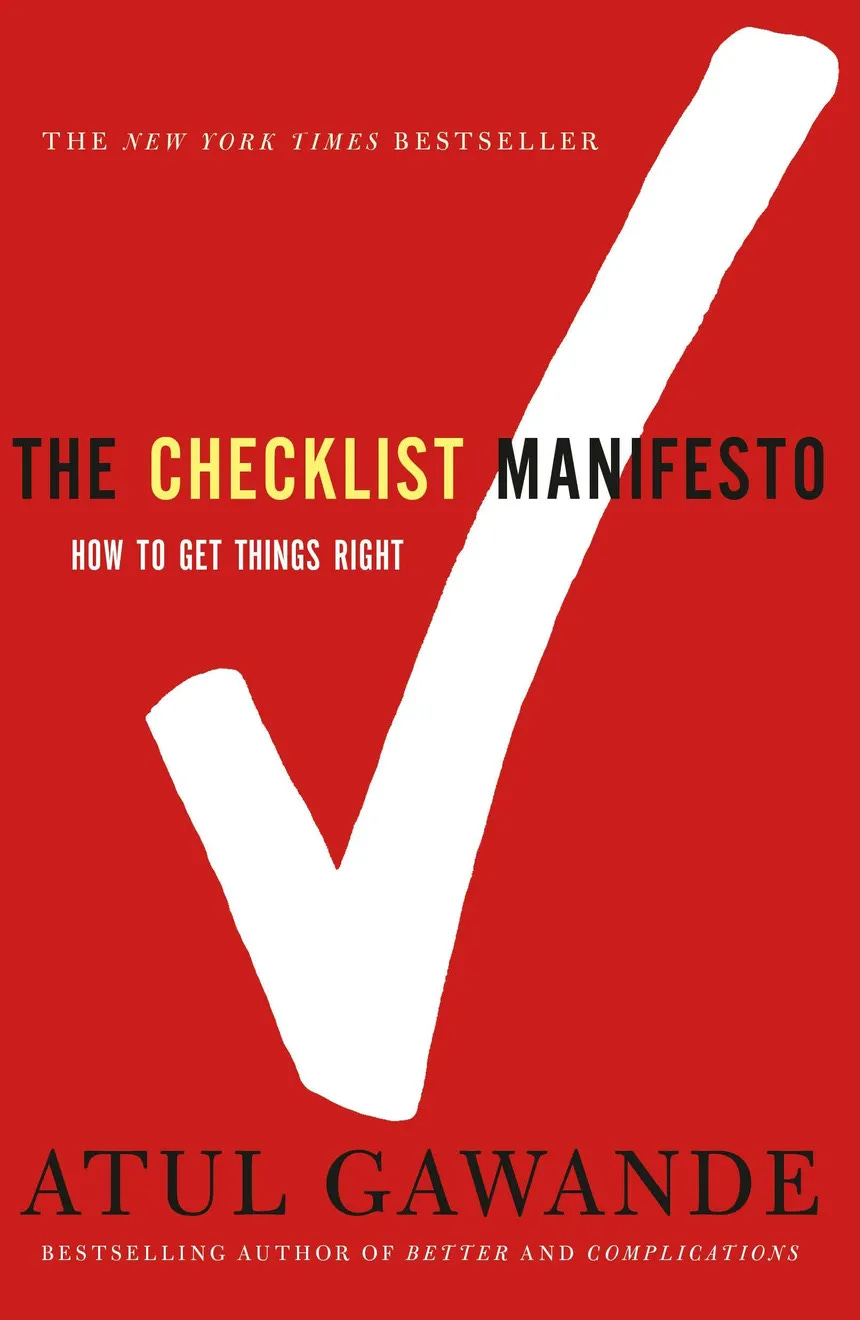
This is one of my favourite books. Not in a passive, sits on the shelf kind of way. I use it in safety work all the time.
And that matters, because The Checklist Manifesto is not a theoretical text. It is a field manual for people operating in environments where mistakes cost lives, reputations, and careers.
Atul Gawande’s core insight is deceptively simple: in complex systems, failure is rarely about a lack of knowledge. It is about breakdowns in coordination, communication, and follow through. People know what to do. They just do not do it reliably under pressure.
Anyone who has worked in WHS, healthcare, construction, energy, or emergency response will recognise this immediately.
What the book actually argues
Despite how it is often misused, this is not a book about paperwork.
Gawande is arguing for discipline in execution. For designing work so that critical steps are not left to memory, hierarchy, or heroics. The strongest examples in the book are not about ticking boxes. They are about forcing moments of pause, confirmation, and shared understanding.
In surgery and aviation, checklists work because they:
Interrupt hierarchy
Legitimate speaking up
Create shared mental models
Reduce cognitive load under stress
That is not administration. That is system design.
This is why I use this book so often in safety conversations. It gives leaders a way to understand that controls are not about trust or competence. They are about reliability.
Where organisations get it wrong
Most workplaces take the surface lesson and miss the hard one.
They introduce checklists as evidence. Pre starts. Audits. Inspections. Assurance artefacts designed to satisfy regulators or boards. Then they are surprised when nothing changes on the ground.
Gawande hints at this risk, but the reality in WHS is stark: a checklist without authority is a liability.
If checklist findings are routinely overridden by time pressure, production targets, or senior preference, the checklist teaches workers one thing very clearly. Speaking up does not matter.
That is how silence becomes operationalised.
The part safety professionals should pay attention to
What The Checklist Manifesto is really about, even if it never uses the term, is psychosocial risk control.
Good checklists:
Reduce ambiguity
Clarify roles
Share responsibility
Lower cognitive strain
Create permission to challenge
In Australian WHS terms, that places them squarely in the space of work design, supervision, and decision making. They are not behavioural prompts. They are structural controls.
But only if leaders let them slow work down when it matters.
The verdict
This book remains essential reading. Not because it tells you to use checklists, but because it forces a harder question.
Where does your organisation rely on memory instead of design?
Where does it rely on silence instead of coordination?
Where does it reward speed over reliability?
I keep coming back to this book because it strips away excuses. If a checklist fails, it is rarely the checklist’s fault. It is the system around it.
Checklists do not create safety.
They expose whether leadership is willing to design for it.
And that is why this book still earns its place in serious safety practice.
you can follow his substck here - https://substack.com/@agawande